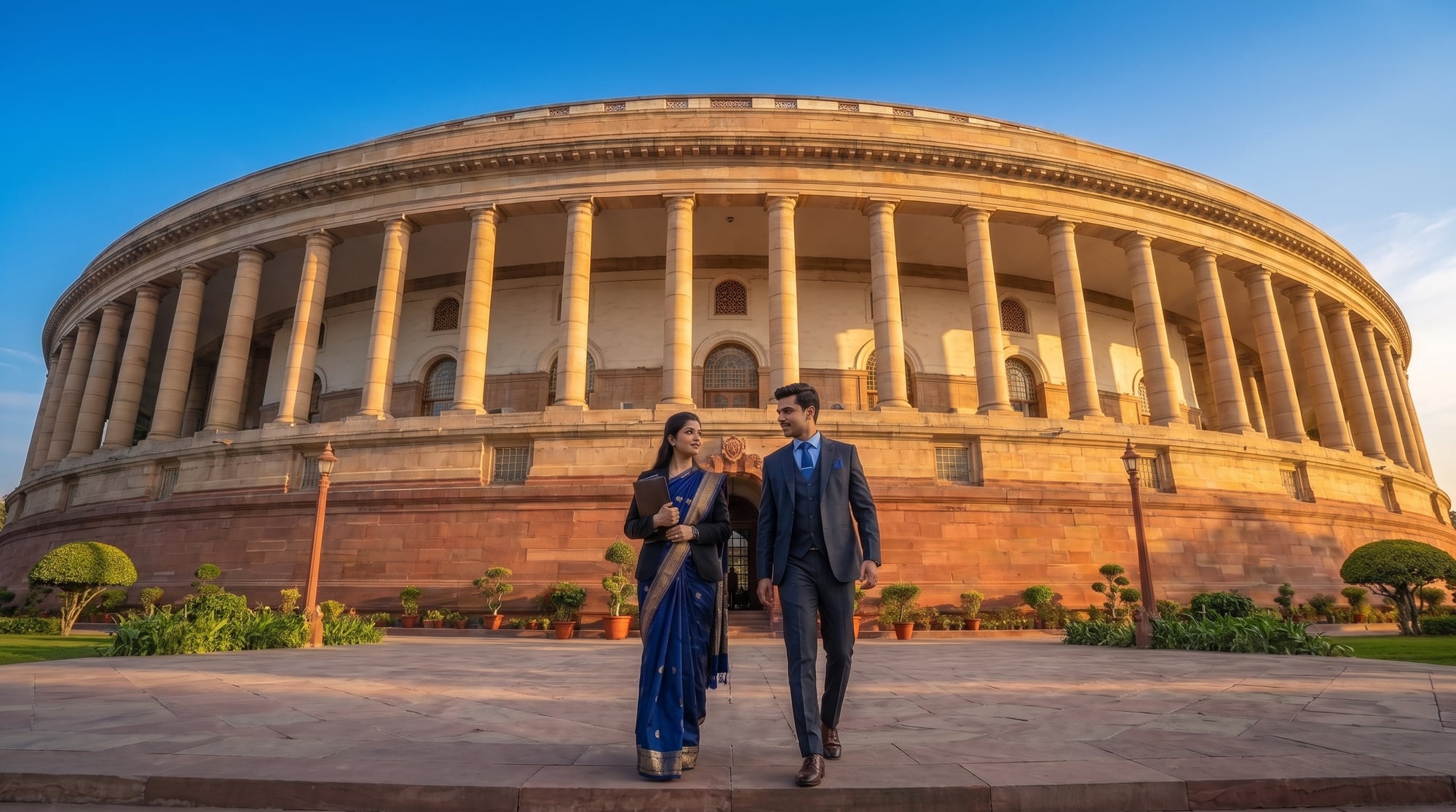
“The vote is precious. It is almost sacred. It is most powerful nonviolent tool we have in a democracy – John Lewis”
1. The Idea Behind One Nation, One Election (ONOE)
The concept behind ONOE means conducting elections for the Lok Sabha and all State Legislative Assemblies at the same time. Under this activity, citizens will cast their votes for the Central and the State governments during a single time instead of voting at different times. India had followed this system from the year 1952 to 1967, when elections to the Lok Sabha and State legislative elections are conducted simultaneously. But this was come to an end because some State Assemblies and Lok Sabha were dissolved before completing their 5-year terms. This was happened due to reasons such as political instability, fall of governments, and the imposition of President’s Rule under Article 356 of the Constitution of India. As a result, elections were taken place at different times in different states, and this has been followed till today.
(ONOE)
Constitution does not directly mention about ONOE but it contains the rules for the dissolution of Lok Sabha and State Legislative Assemblies. Therefore, to implement ONOE the following provisions would need to be amended.
A. “Article 83(2) – Duration of the Lok Sabha”
According to “Article 83(2) of the Constitution”, the Lok Sabha has a term of 5 years from its first meeting. However, it can be dissolved before completing these 5 years. If this happens, fresh elections are conducted before the 5-year term ends, making it difficult to hold elections simultaneously across the country. Therefore, amendment to this provision would be needed to implement ONOE.
2|Pa ge
B. “Article 85 – Dissolution of the Lok Sabha” “Article 85 of the constitution” gives the power to President to ‘summon, prorogue and dissolve the Lok Sabha.’ If the Lok Sabha is dissolved before completing its 5-year term, fresh elections must be held. This makes it difficult to conduct Lok Sabha and State Assembly elections at the same time.
C. “Article 172 – Duration of State Legislative Assemblies”
Same wise “Article 83, Article 172” says 5-year term for State Legislative Assemblies unless it dissolved before. Since, State Assemblies may be dissolved or complete their terms at different times, elections are held on different dates across the country instead of simultaneously.
D. “Article 174 – Dissolution of State Assemblies” “Article 174” gives the power to governor to summon, prorogue and dissolve the Legislative Assembly. The coordination of elections would require changes to the operation of this provision.
E. “Articles 75(3) and 164(2) – Collective Responsibility” “ Articles 75(3) and 164(2)” provide that the Central and the State governments are responsible to both Lok Sabha and the State Legislative Assembly. If a government loses its majority, then it may fall and new elections might conduct. This can affect the goal of holding all elections at the same time.
F. “Article 356 – President’s Rule” “Article 356 of the constitution of India permits the imposition of the President’s Rule when Constitutional machinery fails in a State.” If, President’s Rule is imposed in a State, then elections may be held at different time from the Lok Sabha elections. This can make it difficult to conduct simultaneous elections across the country.
3. Landmark cases relevant to One Nation, One Election The Supreme Court has not directly ruled on the constitutional validity of ONOE but, it provided constitutional principles that shape the debate.
Case law 1: “Kesavananda Bharati v State of Kerala (1973) SC”
In this case, the Supreme Court evolved the basic structure doctrine, saying that parliament cannot amend the Constitution in a way that destroys its basic features. Since democracy, federalism, and constitutional governance from part of the basic structure any constitutional amendment introducing ONOE must satisfy this limitation.
Case Law 2: “Rameshwar Prasad v Union of India (2006) SC”
In this case, the Supreme court held that State Legislative Assembly cannot be dissolved without a valid constitutional reason. It made it clear than an assembly cannot be dissolved just to make the election process easier or for administrative convenience.
Case Law 3: “Indira Nehru Gandhi v Raj Narain (1974) SC”
In this case, the Supreme Court held that the fair elections are a part of basic structure of the constitution. This means that any electoral reform, including ONOE must ensure that the elections remain fair and democratic.
Case Law 4: “Kihoto Hollohan v Zachillu (1992) SC”
In this case, the Supreme Court held that the 10th Schedule which deals with Anti Defection Law says, legislators who defeat from their political party can be disqualified. Such defections will cause the governments to lose the majority. This judgement discourages the defections and promotes political stability which supports the concept of ONOE.
4. Advantages of One Nation, One Election ONOE offers several benefits by conducting all elections at the same time can reduce the overall cost of elections by avoiding repeated development of security forces, election officials, and other resources. It also reduces frequent interruptions caused by the Model Code of Conduct, allowing governments to focus on development and public welfare programmes. Simultaneous elections can improve governance by reducing continuous election campaigns and enabling better long-term planning. In addition, it eases the workload of the Election Commission as well. According to “NITI Aayog Discussion Paper (2017)” simultaneous elections can improve administrative efficiency and reduce public expenditure.
4|Pa ge
5. Challenges and Constitutional Concerns The main challenge is maintaining India’s federal structure, as the Central and State government have separate constitutional terms. If the Lok Sabha or State Assembly is dissolved before completing its 5-year term, it becomes difficult to keep all elections on the same schedule. Implementing ONOE would also require changes to the Constitution, proper planning and effective co-ordination among different authorities. Therefore, any reform should protect India’s federal system, democratic value and basic structure of the Constitution.
6. Conclusion ONOE is an important electoral reform that aims to reduce election costs, improve governance, and ensure better use of public resources. However, its implementation requires Constitutional Amendments and proper planning to protect democracy, federalism and fair elections. Therefore, the success of ONOE depends on political concerns, effective legal reforms, and cooperative between Parliament, Election Commission and the State government.
5|Pa ge
7. Bibliography Books Referred 1. M.P Jain, Indian Constitutional Law, 9th Edition., LexisNexis 2. V.N. Shukla, Constitution of India, Eastern Book India Company 3. Granville Austin, The Indian Constitution: Cornerstone of a Nation, Oxford University
Press, 1966
Bare Acts and Statutes 1. The Constitution of India,1950 2. The Representation of People Act, 1950 3. The Representation of People Act, 1951 4. The Conduct of elections Rules, 1961 5. The Registration of Electoral Rules, 1960 Journal Articles Referred 1. Law Commission of India, Constitution paper on Simultaneous Elections (2018) 2. Articles published in journals such as a. Journal of the Indian Law Institute (JILI) b. Indian Journal of Public Administration c. Economic and Political Weekly (EPW)
Government Reports Referred 1. High-Level Committee on Simultaneous Elections (Kovind Committee), Report (2024) 2. Election Commission of India, Statistical Reports on General Elections 3. NITI Aayog, Analysis of Simultaneous Elections: The What, Why and How,
Government of India, 2017
Case Laws Referred 1. Kesavananada Bharati v State of Kerala (1973) SC 2. Rameshwar Prasad v Union of India (2006) SC 3. Indira Nehru Gandhi v Raj Narain (1974) SC 4. Kihoto Hollohan v Zachillu (1992) SC
6|Pa ge
Websites Referred 1. Official Website of Election Commission of India (ECI) https://eci.gov.in 2. NITI Aayog https://www.niti.gov.in/ 3. Ministry of Law and Justice https://www.legislative.gov.in/ 4. One Nation, one Election https://www.legislative.gov.in/